
General information
Universidad Politécnica de Madrid
-
Research GroupApplied Electromagnetism Group (GEA)
-
Hosting Organisiation
-
AddressE.T.S.I. de Telecomunicación Edificio B, 4ª planta Avda. Complutense nº 30 28040 Madrid
-
Contact Info:
-
Phone
-
Emailgi.gea@upm.es
Description
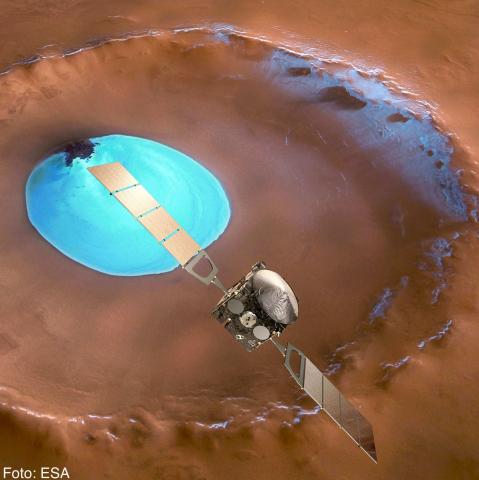
The Applied Electromagnetism Group (GEA) has more than twenty years’ experience in developing software tools for the analysis and design of passive devices, periodical structures and antennas for space applications. The group has implemented efficient numerical methods in computational electromagnetics, such as MoM, FEM, Modal Analysis and Domain Decomposition. Different waveguide components (polarizers, filters, diplexers/triplexers, OMTs, power-combiners, Beam-Forming-Networks) and dichroic sub-reflectors have been designed, built and tested. Some of them have flight in Telecom satellites (Hispasat-1A-B-C-E, Artemis, Sesat, Astra-1K-3B-1M, Europe*Star, Newbird, Sky-Bridge, Eutelsat-W2A, Amazonas-2-5, among others) and scientific missions (Mars Express, Venus Express, Rosetta, Herschel-Planck, Bepi-Colombo).
Summary of Research Services
Computational Electromagnetism
Spacecraft & Satellite Antenna Design
Reconfigurable & Dynamic Beam Antennas
Electromagnetic Dosimetry
Technology Capabilities
High-efficiency Reflectarray/Transmitarray Antennas
Low cost steered-beam antennas using liquid crystal and other technologies
High-performance passive devices in waveguide technology
Metamaterials and periodic transmission lines
Computational Electromagnetics
Main equipment or Facilities
Technological development of high-performance passive reflectarray antennas for space and 5G communications, as well as frequency selective surfaces (Mars Express dichroic subreflector).
Design, manufacture and measurement of low cost antennas and liquid crystal sensors in millimeter and sub-millimeter waves, as well as using other technologies (diodes, MEMS, graphene).
Design and development of passive microwave and millimeter wave components (filters, multiplexers, orthomode transducers, power combiners) based in waveguide technology for satellite applications (Hispasat 1B, Eutelsat W2A, Astra 3B, Rosetta).
Development of efficient CAD tools for the design of passive microwave and millimeter wave components.
Software, tools or licenses to be applied to Big Science
GEA has developed specific software tools for the design of reflectarray antennas for two space applications: a) contoured beams in Ku-band for DBS and b) multi-spot beam in Ka-band.