
General information
-
Hosting OrganisationUniversidad Politécnica de Madrid
-
AddressAvenida Ramiro Maeztu 7. 28040 Madrid
-
Contact Info:
-
Phone
-
Emailinnovacion@upm.es
Description
Universidad Politécnica de Madrid (UPM) is the largest Spanish technological university, as well as a renowned European institution. With two recognitions as a Campus of International Excellence, it is outstanding in its research activity together with its training of highly-qualified professionals, competitive at an international level. More than 2,400 researchers carry out their activity at UPM, grouped in 214 Research Groups, 23 Research Centres and 61 Laboratories, all of them committed to transforming the knowledge generated into advances applied to their corresponding productive sector, contributing to solve the challenges of the European citizens.
Summary of Research Services
One of the main strategies of UPM during last years is to strengthen the active participation in Big Science, bearing in mind the transfer of knowledge generated through its research structures to society and offering technological solutions to real-world problems including those belonging to the Big Science Organisations. Those Big Science Oganisations (Large Scientific Facilities) are one of the main engines of development of scientific and technical knowledge, and they play a key role in our society by energizing the research ecosystem at all levels. They range from the most basic research, which is carried out in many of the experiments, to the development of the latest generation technological solutions necessary to face the challenges of their construction, operation and maintenance. And they do so by combining the efforts of all the agents involved: the scientific community, public and private R&D&i systems and technology transfer, and companies.
The participation in these types of projects and tenders must be strategic for any research institution, and especially for a technological and multidisciplinary university such as UPM. On the one hand, for its driving effect in the development of UPM research capacity. On the other, for the importance and effectiveness that it can have in promoting scientific and technical vocations in society.
Technological universities contribute to the design, implementation and operation of those Large Scientific Facilities, as well as being involved in their completion. These contributions represent strategic priorities of the respective universities, and depend on extensive public funding. UPM recognizes the great importance of the existence of these facilities and it is already developing strategic frameworks and institutional roadmaps in this matter. These institutional activities help to achieve a common understanding of the purpose of the Big Science facilities.
Technology Capabilities
UPM is the first Spanish university capturing external resources in a competitive regime. UPM signs annually around 600 contracts with private businesses, applies for around 60 patents and creates 15 spin-offs. Specifically, considering the Big Science market, over the past years UPM has signed in competitive international calls more than 500 projects and more than 120 projects/tenders directly with Large Scientific Facilities such as ESA, ESS, CERN, ITER, or XFEL, among others, returning more than 11 M€ in this field. Finally, in relation to the Big Science Organisations, some of the main technological and scientific UPM contributions are highlighted:
CERN : Telemanipulation devices and multimodal haptic interfaces, Piezo actuators for high precision positioning systems, Experiment TARC.
ITER/F4E: Hardware and software for CODAC applications, Neutronics and Activation, Diagnostics, Acquisition and evaluation of nuclear data.
Advanced materials.
ALBA: Molecular interactions plant-pathogen.
Biomedical imaging processing
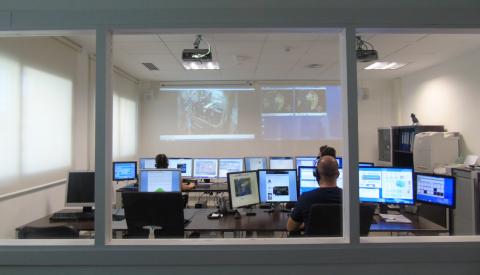
ESA: Preparation, execution and analysis after flight in space experiments, E-USOC activities, Antennas, Solar cell architectures for space applications.
ESRF: Data pre-processing and enrichment, Creation of algorithms for fusion of images, Research on advanced structured materials and nanomaterials.
ESS: Design and development of the Target, beam dump and diagnostics and manufacturing systems.
European XFEL: Power supplies for superconducting magnets.
Development of Physics integrated models, Proposal and design of experiments.
FAIR: Nanoparticles generation, Development of a new European experimental data base to collect data related to radiation damage.
ILL: Development of residual stress field induction methods in metallic alloys, Analysis and characterization of microstructured transformations.
Main equipment or Facilities
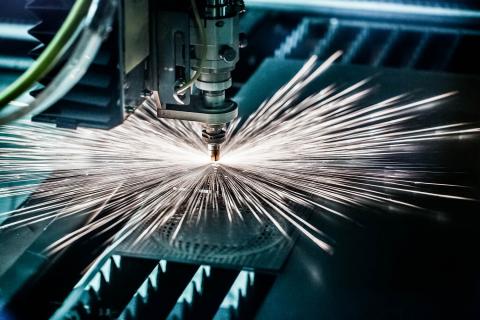
UPM offers advanced scientific and technological infrastructures that support its participation in major Big Science projects. The university provides clean rooms, micro- and nano-fabrication labs, and facilities for advanced materials characterisation (microscopy, spectroscopy and mechanical testing). It also operates high-performance computing resources for modelling, simulation and data processing.
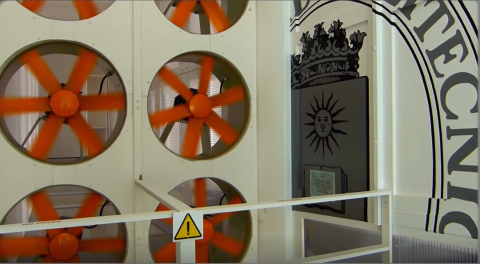
UPM hosts specialised laboratories for electronics and instrumentation, including radiation-tolerant electronics, sensors, actuators and high-precision positioning systems. Additional aerospace and engineering facilities include thermal-vacuum chambers, antenna measurement ranges, vibration and environmental test systems, and wind tunnels for qualification and validation.
In the life-science area, UPM provides laboratories for biotechnology, molecular interactions and biomedical imaging, enabling multidisciplinary research aligned with the needs of large scientific infrastructures.