

General information
Universitat de València
-
Research GroupExperimental High Energy Physics at Colliders
-
Hosting Organisiation
-
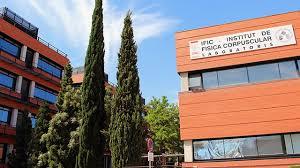
AddressCatedrático José Beltrán, 2. 46980 Paterna
-
Contact Info:
-
Phone
-
Emailuvinnovacio@uv.es
Description
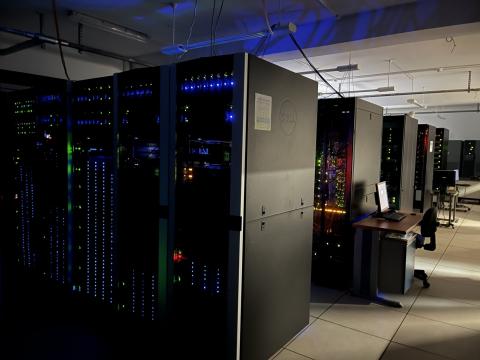
ARTEMISA is a high-performance computing (HPC) infrastructure at IFIC (Universitat de Valencia and CSIC) designed to support data-intensive research in particle physics and related domains. It provides advanced computing capabilities, including GPU-accelerated resources, for simulation, data analysis, and algorithm development. The facility complements the distributed computing model of the Worldwide LHC Computing Grid by enabling local high-performance workloads, optimization of analysis pipelines, and development of next-generation computing techniques. ARTEMISA also supports emerging paradigms such as machine learning and heterogeneous computing applied to experiments like ATLAS experiment at CERN.
Summary of Research Services
ARTEMISA offers:
• Access to GPU and HPC resources for simulation and analysis
• Support for development and optimization of scientific software
• Execution of machine learning workflows
• Performance evaluation of computing models
• Collaboration support for national and international projects
It serves both particle physics and broader data-intensive research communities.
Technology Capabilities
ARTEMISA provides expertise in:
• GPU computing and parallel programming
• High-performance and heterogeneous computing (CPU+GPU)
• Machine learning and AI applications
• Large-scale data processing and optimization
• Integration of HPC with grid computing environments
• Performance benchmarking and scalability studies
These capabilities enable efficient execution of compute-intensive scientific workloads.
Main equipment or Facilities
ARTEMISA includes:
• GPU-enabled computing nodes (for parallel and AI workloads)
• High-performance CPU clusters
• High-speed interconnects for low-latency communication
• Scalable storage systems for large datasets
• Batch systems and workload managers
• Software environments for scientific computing, including ML frameworks
• Integration with grid and cloud infrastructures
The system is designed for hybrid workloads combining HTC, HPC, and AI applications.