
General information
Universitat Politècnica de Catalunya
-
Research GroupCD6 - Center for Sensors, Instruments and Systems Development
-
Hosting Organisiation
-
AddressRambla Sant Nebridi, 10, TR11 Building (08222, Terrassa)
-
Contact Info:
-
Phone
-
Emailsct.rdi@upc.edu
Description
CD6 is a center designed to boost research and innovation activities in the field of optical engineering and photonics. It has complementary specializations in optics, electronics, mechanics and software. It is therefore a multidisciplinary center for the development of applications for transfer to the market.
The activity of CD6 and the professional careers of its members has been recognized by the Government of Catalonia, with the distinction of a Consolidated Research Group since the first call in 1993. It is a member of the Network of Technological Innovation Centers TECNIO of ACCIÓ (Government of Catalonia). The management of the center has ISO9001 certification.
Summary of Research Services
Researchers at the center work in four areas:
• Optical metrology
• Visual biophotonics
• Optical design and simulation
• Spectral and colour technologies
In turn, this has led to innovations in the following fields:
• Design of optical systems and sensors
• Development of instrumentation
• Optical metrology
• Biomedical instrumentation
• Optical sensors for smart cities
• Energy efficiency in lighting
• Optical techniques for non-destructive tests (NDT)
• Colour technology
Technology Capabilities
CD6 has laboratories and workshops that enable it to undertake its activity. They can be grouped into three types:
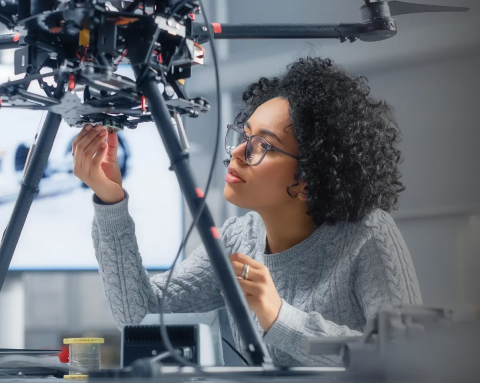
• Workshops, with a total space of 110 m2. There is a machine workshop and an electronic workshop, with the latest equipment to support the design and construction of the projects carried out at the center. The machine workshop is equipped with machine tools and measuring instruments that are suitable for the tasks that are required. The electronics workshop has development tools for various families of 8 and 16-bit microcontrollers. It also has tools for designing programmable logic, like CPLDs and FPGAs.
• Two prototype rooms. Spaces of 60 m2 and 120 m2, for the integration, adjustment and testing of devices designed and built at the center. Located next to the workshops, they have all the necessary services for their full functionality.
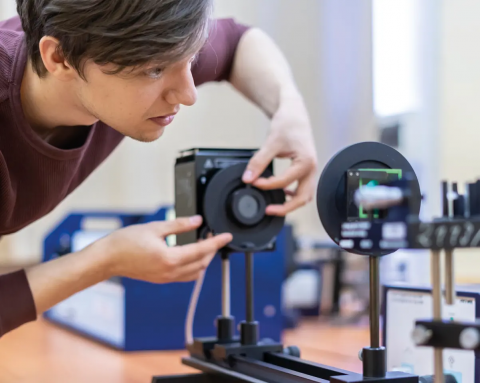
• Design and Development. Laboratories distributed in 5 spaces, with a total area of 310 m2, they can be used for application design tasks, measurements and tests related to the center’s main areas of activity.
o Development of instrumentation
o Laser applications
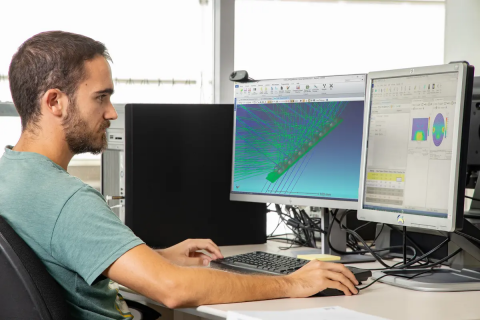
o Design and simulation of optical systems
o Surface metrology, optical parameters, radiometry, photometry and colour measurements
Main equipment or Facilities
• Scanning spectroradiometer
• Colorimeter
• Supercontinuum laser with visible and infrared tunable filter
• Spectroscopic ellipsometer
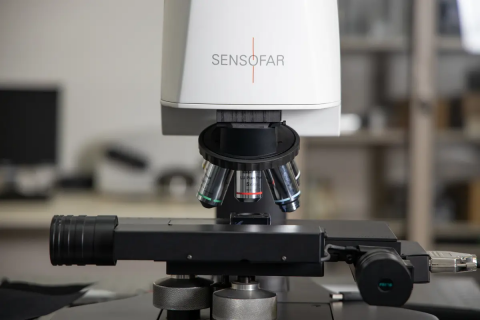
• Optical profilometer
• Thin film reflectometry system
• Radiometer- photometer
• Vis-ir fourier transform specturm analyzer
• Scheimpflug camera / corneal topography camera