
Instituto Tecnológico de Aragón
LOGOTIPO_ITA
Imagen
ITA
1
Imagen
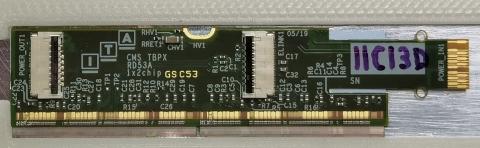
Prototype of an HDI TBPX 1×2 module with two RD53A chips and a double 3D sensor for the Phase-II upgrade of the CMS Inner Tracker-HL-LHC (ITA, IFCA & IMB-CNM)
2
Imagen
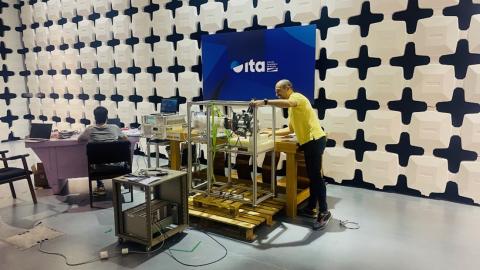
Testing and characterisation of the BabyIAXO Micromegas detector prototype inside ITA’s semi-anechoic chamber – Dark Matter Searches (ITA & CAPA,UNIZAR)
3
Imagen
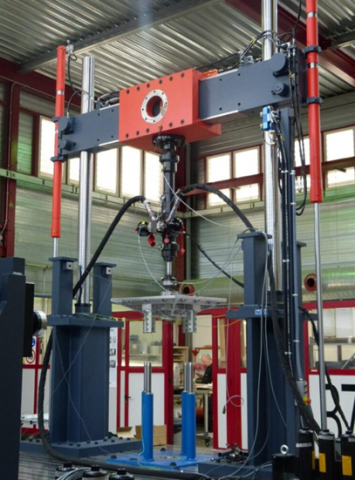
Large-scale load test bench designed to evaluate component performance and durability under real operating conditions, with load capacities up to 1,500 kN
4
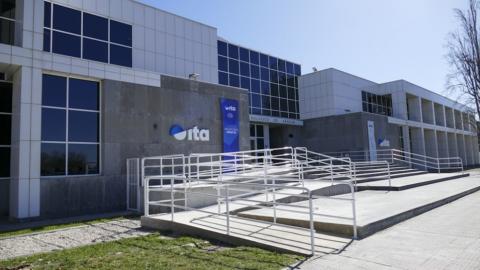
Pic legend 1: ITA
Pic legend 2: Prototype of an HDI TBPX 1×2 module with two RD53A chips and a double 3D sensor for the Phase-II upgrade of the CMS Inner Tracker-HL-LHC (ITA, IFCA & IMB-CNM)
Pic legend 3: Testing and characterisation of the BabyIAXO Micromegas detector prototype inside ITA’s semi-anechoic chamber – Dark Matter Searches (ITA & CAPA,UNIZAR)
Pic legend 4: Large-scale load test bench designed to evaluate component performance and durability under real operating conditions, with load capacities up to 1,500 kN

General information

  • Hosting Organisation
    Instituto Tecnológico de Aragón
  • Address
    c/María de Luna 7-8, 50018, Zaragoza
  • Contact Info:

Description

The Aragón Institute of Technology (ITA) is a public Research and Technology Organisation dedicated to applied research, technological development, and industrial innovation. With more than 320 professionals and a multidisciplinary structure, ITA integrates advanced engineering, scientific knowledge, and technology transfer across four strategic domains: Electrical & Electronic Technologies, Materials & Components, Mechatronics & Robotics, and Digital Technologies.
• The Electrical Technologies area develops solutions in power electronics, electromagnetic compatibility, instrumentation, RF systems, energy storage, embedded systems, and digital twins. The division has more than 15-year track record in particle-physics detector R&D, collaborating with CERN, KEK, FERMILAB, SLAC and the Canfranc Underground Laboratory (LSC). Its contributions include front-end electronics design, power distribution architectures, advanced EMI/EMC diagnostics, RF-SoC platforms for quantum-related applications, and full detector and subsystem validation.
• The Materials & Components area focuses on advanced materials, structural reliability, composites, fatigue and dynamic behaviour, sensor integration, and multiphysics simulation for aerospace, automotive, energy and manufacturing sectors.
• The Mechatronics & Robotics area develops industrial automation, collaborative robotics, autonomous systems, precision control, multisensor perception, and cyber-physical systems for intelligent manufacturing and logistics.
• The Digital Technologies area covers artificial intelligence, computer vision, high-performance simulation, digital twins, scientific software, data analytics, cybersecurity and secure IoT architectures.
Overall, ITA operates across TRL 3–8, acting as a comprehensive applied-research centre that bridges scientific development, engineering excellence and industrial deployment, with a strong and sustained contribution to international particle-physics programmes.

Summary of Research Services

ITA provides a comprehensive portfolio of research, development, testing and validation services for industry and scientific organisations. Its offering includes collaborative R&D projects, proof-of-concept development, advanced characterisation, experimental diagnostics, prototyping and technology transfer.
In Electrical Technologies, ITA delivers design and validation of front-end electronics, power converters, rad-hard and GaN systems, and high-precision timing solutions based on White Rabbit. ITA also provides services in high-efficiency electrical systems, energy-storage solutions, supporting design, modelling and testing of reliable power architectures. Additional services include EMI/EMC diagnostics, High Frequency EM modelling, RF characterisation, and FPGA/RF-SoC platforms for high-speed acquisition and signal processing. ITA also supports functional validation, system-level integration and non-standard testing for particle-physics detectors.
In Materials & Components, services include mechanical and thermal characterisation, structural analysis, durability and failure modelling, development of advanced materials, dynamic and fatigue testing, multiaxial behaviour evaluation and sensor integration. ITA also offers FEM and CFD multiphysics modelling, including thermal behaviour, fluid–structure interaction and component optimisation.
In Mechatronics & Robotics, services encompass robotic-system design, industrial automation, collaborative-robot evaluation, process simulation, advanced control, performance assessment, functional-safety analysis, multisensor fusion, 3D perception and autonomous navigation.
In Digital Technologies, ITA provides modelling and simulation, digital twins, advanced analytics, computer vision, machine learning, IoT architectures, scientific software development, industrial cybersecurity and large-scale data processing. Custom digital platforms and intelligent monitoring systems are also developed.

Technology Capabilities

In Electrical & Electronic Technologies, ITA specialises in high-speed and low-noise electronics, GaN and rad-hard power converters, reliable power architectures for demanding environments, and advanced front-end electronics for particle-physics detectors. The institute has strong expertise in sub-nanosecond distributed timing (White Rabbit), EMC/EMI mitigation in complex facilities, RF systems for quantum applications, electromagnetic modelling and implementation of algorithms on reconfigurable hardware platforms such as FPGA and RF-SoC.
In Materials & Components, ITA offers capabilities in the design and optimisation of functional materials, advanced FEM and multiscale simulations, mechanical and dynamic characterisation, fatigue, impact and vibration testing, development of lightweight components, metamaterial studies and structural reliability assessment for high-performance sectors.
In Mechatronics & Robotics, ITA provides capabilities in collaborative-robot design, flexible automation systems, high-precision motion control, integration of advanced sensing (3D vision, LiDAR, tactile sensors), autonomous-navigation algorithms, intelligent manipulation, cyber-physical systems and validation of industrial robotic platforms for Industry 4.0.
In Digital Technologies, ITA has strong competencies in artificial intelligence, computer vision, deep learning, secure IoT architectures, industrial digital twins, mathematical optimisation, advanced simulation, large-scale data analytics, cybersecurity and high-performance computing. The centre also integrates hybrid physical–data models to couple real systems with predictive digital representations.
These capabilities enable ITA to undertake complex, multidisciplinary projects and support the development of innovative solutions across industry, energy, transport, aerospace, advanced manufacturing and, notably, the field of particle-physics detecdetectors and large scientific infrastructures.

Main equipment or Facilities

ITA operates advanced scientific and technological infrastructures that support cutting-edge research in industry and, notably, in Big Science and particle-physics experiments.
In Electrical & Electronic Technologies, ITA hosts a unique EMC laboratory in Europe, the only facility providing specialised EMC services dedicated to particle-physics detectors and large scientific infrastructures. Recognised as a Transnational Access Facility under AIDA2020 and EUROLABS, it supports international research teams in electromagnetic characterisation, noise diagnostics and grounding studies essential for high-energy physics. ITA also maintains laboratories for power electronics, instrumentation, rapid prototyping, White Rabbit timing and front-end electronics validation, enabling integrated support to detector development.
In Materials & Components, ITA operates extensive laboratories equipped with large-scale mechanical and structural test benches, allowing evaluation of components under high loads, large displacements and complex dynamic conditions. These facilities include mechanical, thermal and fatigue-testing areas, dynamic characterisation equipment, structural-analysis tools and advanced materials laboratories. They support the design, optimisation and validation of high-performance components used in demanding sectors such as aerospace, transport, energy and scientific instrumentation.
In Mechatronics & Robotics, the institute provides industrial and collaborative robotics labs, autonomous-robot platforms, advanced perception systems, simulation environments and pilot lines for intelligent and automated processes.
In Digital Technologies, ITA offers HPC platforms, digital-twin environments, AI and vision test benches, IoT and edge-computing infrastructures, and cybersecurity laboratories for secure digital systems.
Together, these facilities offer an integrated environment reinforcing ITA’s strong role in European Big Science initiatives.

Contracts for Big Science facilities

[LSC] Electromagnetic characterization and study of the corrective measures required in the Canfranc Underground Laboratory (LSC) (2019 - 2021)
Determine the complete electromagnetic map of the LSC, both conducted and radiated.
[CERN] MoU KN3478 (2017)
Collaboration Framework between CERN and ITA in Detector Technology, Electronics, Material Science, and Mechanical & Software Engineering
[ITER ORGANIZATION - MP Ascensores, Spain ] Distribution and effects of the magnetic field generated by ITER’s fusion reactor on MP elevator shielding (2014 - 2015)
The project analyses the magnetic field levels that will affect specific areas of the elevators due to the DC magnetic field generated by the Tokamak.

Relevant R&D projects

[PDC2023] State-of-the-art Semiconductor Detectors for Advanced Proton Tomography in Proton Therapy for Oncology (PROTEC ) (2024 - 2025)
PROTEC develops a next-generation proton tomography method based on LGAD sensors and AI-enhanced imaging to enable safer, higher-precision cancer treatment. The project integrates expertise in microelectronics, detector physics and medical radiotherapy to create a high-performance 4D tracking system. ITA contributes by designing the advanced electronics and distributed timing architecture required for high-rate data acquisition and picosecond-level time-of-flight measurements essential to the tomography platform.
[PID2023] Participation in the CMS experiment of LHC: IT and ETL upgrades for high luminosity, and ECFA DRDs (CMSUPG2 ) (2024)
CMSUPG2 supports the construction of the new Inner Tracker and Endcap Timing Layer for the HL-LHC CMS upgrade while advancing long-term R&D in solid-state detectors and electronics through the ECFA DRD collaborations. The project addresses next-generation tracking, timing and radiation-tolerant technologies for future particle-physics experiments. ITA leads the development of the distributed synchronization and timing architecture based on White Rabbit and contributes to advanced power-conversion systems for high-precision detector electronics
[PID2022] Development and improvement of detection and RF front-ends to mitigate electromagnetic detector noise (BabyIAXO Electronics ) (2023)
This project supports the development of BabyIAXO, the intermediate-scale axion helioscope designed as both a technology demonstrator for IAXO and a standalone experiment with discovery potential. The work focuses on advancing DAQ, Front-End and Back-End electronics, incorporating disruptive technologies and improving the readout of Micromegas and RF-RADES detectors. ITA contributes by conducting comprehensive electromagnetic-compatibility studies—addressing emission, immunity and noise impact—to optimise the electrical and electronic design and ensure stable detector performance
[Horizonte Europa] EUROpean Laboratories for Accelerator Based Sciences (EUROLABs ) (2022)
The EURO-LABS project provides the scientific community with access to 33 leading European research infrastructures for developing advanced detector and accelerator technologies. It strengthens scientific capabilities through transnational access, service upgrades, open data management and specialised training. ITA contributes by offering its unique EMC laboratory for electromagnetic characterisation of next-generation detectors, enabling more precise electronics and supporting the development of future high-energy physics instrumentation.
[PDC2021] Distributed Clock network and power distribution system design for the technology demonstrator of the Timing Muon Tomography (TMT) concept (TOMULGAD ) (2022 - 2023)
TOMULGAD aims to validate a high-resolution 4D muon tomography method that combines LGAD-based detectors with Deep Learning imaging to monitor the structural integrity of large infrastructures. By measuring both muon trajectories and time-of-flight, the technique overcomes the resolution limits of conventional muon tomography. ITA’s contribution focuses on developing the ultra-stable clock-distribution and power-delivery system required to synchronise the detectors and enable precise time-of-flight measurements.
[H2020] Advancement and Innovation for Detectors at Accelerators (AIDAinnova ) (2021 - 2025)
AIDAinnova aims to strengthen Europe’s detector-development capabilities by integrating innovative technologies—such as hybrid CMOS sensors, additive manufacturing and Machine Learning—into next-generation HEP instrumentation. The project enhances test-beam and irradiation facilities, promotes cross-community synergies and prepares European industry for large-scale detector production. ITA contributes through its expertise in electronics, EMC and advanced characterisation, supporting mid-TRL developments essential for future particle-physics experiments.
[PID2020] ITA activities for CMS high luminosity upgrades: Inner Tracker and Endcap Timing Layer (CMSUPG ) (2021 - 2024)
This coordinated project supports the construction of the new Inner Tracker and Endcap Timing Layer for the HL-LHC upgrade of the CMS experiment, addressing extreme radiation levels and the need for precise tracking and timing. The consortium combines sensor fabrication, module integration and advanced simulation to deliver hundreds of fully functional detector modules based on 3D silicon and LGAD technologies. ITA contributes through its expertise in serial power distribution, high-density interconnect (HDI) design and electromagnetic-compatibility studies, ensuring robust electronic performance and reliable integration of the new detector systems
[DGA Convocatoria 2021–2023] Design and development of a protection system against current-source-based transients using GaN transistors and integrated supercapacitors for the new CMS Pixel Detector – Phase II (GANCAP4CMS ) (2021 - 2022)
This project develops and validates a prototype TBPX-HDI incorporating CROC chips, GaN-based current sources and supercapacitors to improve energy efficiency and transient tolerance in the CMS pixel detector electronics. The work aims to qualify the technologies and design approaches that will be used in the final CMS HDI. ITA contributes through its expertise in power-distribution architectures, supercapacitor-assisted protection systems and GaN-based electronics for particle-detector applications.
[FPA2017] Participation in the CMS experiment of LHC: Pixel upgrade for high luminosity (CMSRUN2B ) (2018 - 2021)
This coordinated project strengthens Spain’s contribution to CMS during Run 2 and prepares for the HL-LHC upgrade by advancing physics analysis, detector operation and next-generation sensor technologies such as 3D pixels and LGADs. The consortium works on module assembly, radiation-tolerant detectors, serial powering and improved data-acquisition systems. ITA contributes expertise in low-mass serial power distribution, detailed EMC studies and electronic-integration simulations, ensuring reliable performance of future CMS tracking systems.
[DGA] Development and design of the HDI (High Density Interconnection) board based on the RD53A readout chip for the new CMS Pixel Detector – Phase II (HDI4CMSPIX ) (2018 - 2020)
This project designs, develops and tests a prototype TBPX-HDI based on the RD53A chip, introducing advanced EMC-driven design techniques to control electromagnetic noise, minimise Shunt-LDO transients and define a high-frequency grounding strategy for the CMS pixel detector. The goal is to validate the technologies and layout concepts to be used in the future PROC HDI for CMS. ITA plays a key role by contributing its expertise in EMC integration and power-distribution architectures, enabling one of the first detector-electronics systems intentionally engineered to be immune to electromagnetic interference and transient effects.
[H2020] Advanced European Infrastructures for Detectors at Accelerators (AIDA 2020 ) (2015 - 2019)
AIDA-2020 brings together Europe’s leading particle-physics laboratories, universities and technology centres to develop next-generation detector technologies, supported by specialised test and validation infrastructures. The project includes networking, transnational access and coordinated R&D activities aligned with the European Strategy for Particle Physics. ITA, one of the Spanish partners and leader of a work package, provides its expertise and unique facilities for electromagnetic characterisation of detectors, applying EMC techniques to minimise noise and improve detector performance by design.
[FPA2014] Participation in the CMS experiment of LHC: run 2 and upgrade of high luminosity (CMSRUN2 ) (2015 - 2018)
This coordinated project supports Spain’s continued participation in CMS during Run 2, combining physics analysis, detector operation and R&D for the HL-LHC Phase-2 upgrade. The consortium advances radiation-hard 3D pixel sensors, power-distribution technologies and improved computational tools while contributing to CMS maintenance and muon-system alignment. ITA plays a key role in developing low-material serial power-distribution systems and conducting electromagnetic-compatibility studies essential for the next-generation CMS vertex detector
[FPA2010] R&D on Detectors for Future Colliders (DET4HEP ) (2011 - 2014)
DET4HEP is a technology-driven project aimed at developing innovative detector technologies for future collider experiments, including the sLHC, Linear Collider and next-generation flavour factories. The consortium advances new sensor concepts, optical monitoring systems and improved large-scale detector designs aligned with major European R&D initiatives such as EUDET and AIDA. ITA contributes by leading the electromagnetic-compatibility (EMC) studies of tracker and pixel power-distribution networks, addressing noise, grounding and interference issues essential for reliable detector performance.